

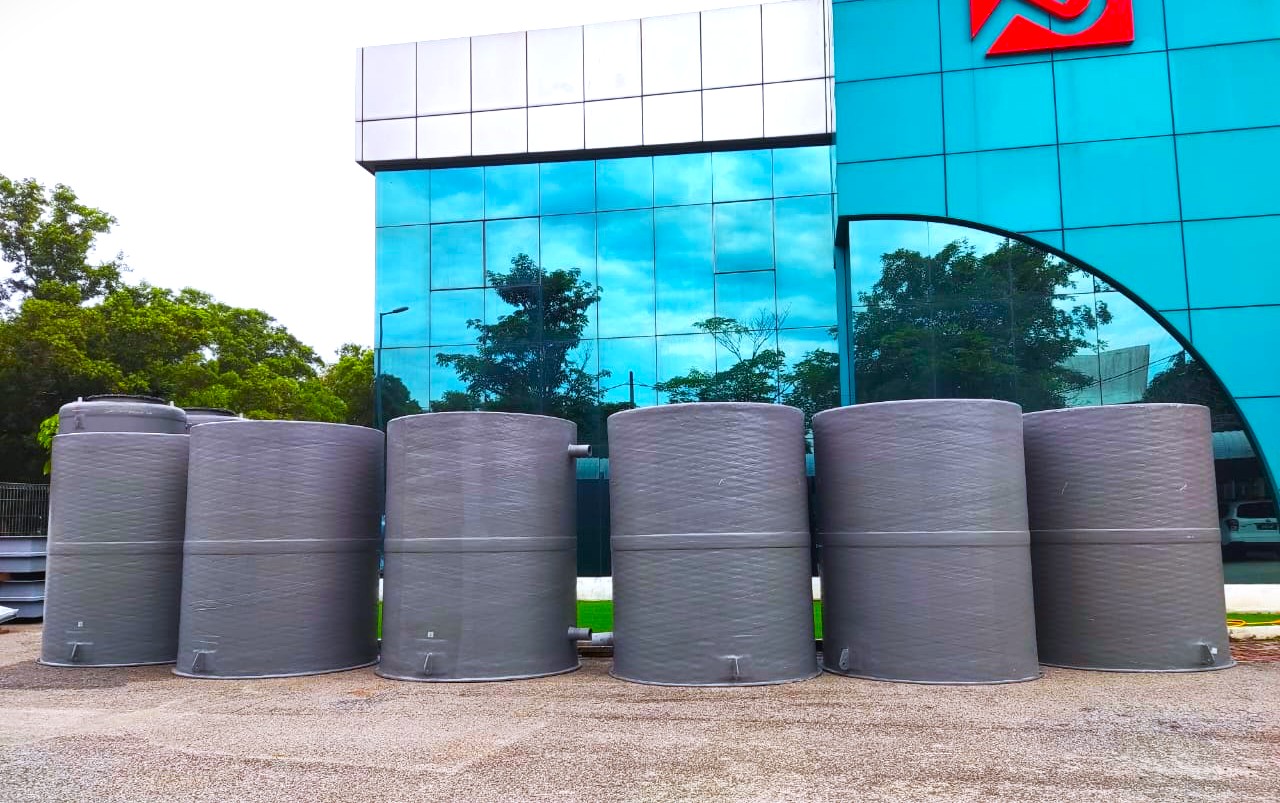
For industrial facilities in Malaysia—from manufacturing plants and chemical processing sites to water treatment facilities and glove production lines—selecting the right FRP (Fiberglass Reinforced Plastic) tank supplier is a crucial investment. The right supplier not only provides robust, corrosion-resistant tanks but also supports your compliance, operational efficiency, and workplace safety. This comprehensive tutorial offers a step-by-step approach, with practical examples and actionable advice, to help you confidently navigate the selection process and secure long-term value.
Step 1: Define Your FRP Tank Requirements
Begin by thoroughly identifying your operational needs. FRP tanks are used to store, process, or treat a wide range of chemicals, water, and industrial effluents. Consider:
- Application type: Are you storing acids, alkalis, solvents, process water, or effluent?
- Capacity: Determine the required tank volume based on your production rates and storage cycles.
- Operating conditions: Note the temperature, pressure, and chemical concentration the tank must withstand.
- Site constraints: Measure available installation space and consider access points for delivery and maintenance.
- Compliance needs: Identify any Department of Environment (DOE) or Department of Occupational Safety and Health (DOSH) regulations relevant to your industry.
Example: A glove manufacturing line may require FRP tanks for online chlorination with precise corrosion resistance, while a water treatment plant might need large clarifiers for handling treated effluent.
Tip: Document your requirements in detail, including any anticipated future expansion, to streamline discussions with potential suppliers and avoid costly design changes later.
Step 2: Shortlist Experienced FRP Tank Suppliers in Malaysia
Once you have clear specifications, research local FRP tank suppliers with a strong industrial track record. Look for suppliers who:
- Have been established for several years and possess substantial project portfolios.
- Offer in-house manufacturing and fabrication capabilities in Malaysia, ensuring quality control and reliable delivery.
- Demonstrate experience in your specific sector—be it glove manufacturing, chemical processing, or municipal water treatment.
- Provide references or case studies for similar projects.
Review supplier websites for details on their facilities, certifications, and past projects. Companies like Polydamic Sdn Bhd, with nearly three decades of experience and ISO 9001:2015 certification, can offer valuable peace of mind.
Checklist: When shortlisting, create a comparison table including years in business, scope of past projects, certifications, and offered services. This makes it easier to objectively evaluate competing suppliers.
Step 3: Assess Engineering and Customization Capabilities
The best frp tank supplier in malaysia should offer bespoke engineering solutions, adapting tank design to your specific process needs. Key factors to evaluate include:
- Material expertise: Can they fabricate tanks using FRP, PVC, CPVC, PP, PVDF, or dual-laminate composites for enhanced chemical resistance?
- Design flexibility: Are they able to engineer tanks for non-standard sizes, special linings, or integrated features such as inspection hatches, nozzles, or level sensors?
- Engineering support: Do they provide PE-endorsed drawings, structural calculations, or compliance documentation for DOE submissions?
Example: A petrochemical plant may need FRP tanks with dual-laminate construction and custom nozzle arrangements for aggressive chemicals, while electronics manufacturers may require process tanks with tight dimensional tolerances and exhaust integration.
Ask about the supplier’s in-house engineering team and their experience with similar process challenges. Customization ensures that tanks fit seamlessly into your existing infrastructure and process flow.
Step 4: Evaluate Quality Assurance and Certification
Quality assurance is non-negotiable for industrial FRP tanks. Verify that your shortlisted suppliers follow recognized quality management systems and can demonstrate:
- ISO 9001:2015 or equivalent certification.
- Internal quality control checkpoints during fabrication—such as resin curing, laminate thickness checks, and hydrostatic testing.
- Traceability of raw materials, including fiberglass, resins, and liners.
- Factory acceptance testing (FAT) and site acceptance testing (SAT) protocols.
Request documentation and, if possible, arrange a factory visit to observe their manufacturing processes firsthand. Quality-focused suppliers are transparent about their procedures and will welcome client audits.
Warning: Avoid suppliers unwilling to provide documentation or access to their quality control process. Lack of transparency can signal potential risks to tank durability and compliance.
Step 5: Review Compliance and Environmental Support
Industrial FRP tanks in Malaysia often require compliance with DOE, DOSH, and other environmental or safety regulations. Your supplier should offer:
- Assistance with regulatory submissions and engineering calculations.
- Expertise in air pollution control systems, especially if the tanks are part of scrubber or exhaust ventilation setups.
- Local Exhaust Ventilation (LEV) assessment and reporting services.
- Full documentation for environmental audits and regulatory reviews.
For those in sectors such as chemical processing or glove manufacturing, choose a supplier familiar with integrated air pollution control equipment and glove online chlorination system requirements. This ensures your tanks fit seamlessly into your broader compliance strategy.
Best Practice: Engage your EHS (Environment, Health, and Safety) team early in the selection process. Their input ensures that tanks and related systems meet both operational and regulatory expectations.
Step 6: Compare Material Selection and Corrosion Resistance
The long-term performance of your FRP tanks depends heavily on material selection. A reputable supplier should help you select the right resin system (e.g., vinyl ester, polyester) and, if necessary, specify compatible liners (e.g., PP, PVC) for dual-laminate tanks.
- Discuss the chemical resistance required for your stored media.
- Ask about previous projects involving similar chemicals or process conditions.
- Request samples or technical data sheets for proposed materials.
Example: A water treatment plant storing sodium hypochlorite may require FRP tanks lined with PVC or PP to ensure long-term durability and minimize maintenance.
Consider lifecycle costs, not just initial purchase price. The right material choice can drastically reduce downtime, repair costs, and safety risks over decades of operation.
Step 7: Assess Installation, Commissioning, and After-Sales Support
Tank performance is not just about manufacturing quality. The right FRP tank supplier in Malaysia should offer comprehensive project support, including:
- On-site delivery, installation, and alignment of tanks.
- Commissioning and initial leak or pressure testing.
- Training for your maintenance teams on safe operation and inspection routines.
- Quick-response service teams for urgent repairs or scheduled maintenance.
Example: A glove factory upgrading its chlorination line benefits from a supplier who provides both FRP tanks and integrated exhaust scrubber systems, along with coordinated installation and DOE application support.
Clarify the scope of after-sales support, response time commitments, and availability of spare parts. A supplier who remains engaged post-installation can help you address unexpected challenges quickly and effectively.
Step 8: Evaluate Value, Lead Time, and Project Management
While cost is important, prioritize total lifecycle value over the lowest upfront price. Assess:
- Clarity and transparency of quotations—breakdown of materials, fabrication, delivery, and installation.
- Typical lead times and the supplier’s ability to meet your project schedule.
- Project management support, including regular progress updates and a single point of contact.
- Proven ability to handle large-scale or fast-track projects for industrial clients.
Suppliers with integrated one-stop solutions simplify your project and reduce coordination risks. In-house fabrication, project management, and regulatory assistance are key differentiators for complex industrial installations.
Scenario: For a new production line with a tight commissioning deadline, select a supplier who provides project milestone tracking and maintains open communication, minimizing unexpected delays and cost overruns.
Step 9: Request Technical References and Visit Completed Projects
Before finalizing your supplier, request references and, if possible, visit sites where their FRP tanks are operational. Look for:
- Long-term client relationships and repeat business in your sector.
- Performance of tanks after years in service—check for signs of corrosion, leakage, or structural failure.
- Feedback on the supplier’s responsiveness during installation and after-sales phases.
Site visits and peer recommendations provide invaluable assurance that your chosen supplier can deliver as promised.
Tip: Prepare a checklist for site visits, including inspection of tank condition, interview with maintenance staff, and review of any documented issues or repairs. This gives a realistic picture of supplier reliability.
Step 10: Finalize Supplier Selection and Contract Terms
Once you have completed your due diligence, move forward by:
- Reviewing the full technical proposal, drawings, and material specifications.
- Clarifying warranty terms, including coverage for resin, laminate, and liner failures.
- Agreeing on payment milestones tied to project progress and acceptance tests.
- Documenting all compliance, testing, and commissioning requirements in the contract.
A transparent and detailed contract ensures both parties understand expectations, timelines, and responsibilities—reducing the risk of costly misunderstandings.
Checklist:
- Request a sample contract and review with your legal and procurement teams.
- Verify that all compliance and testing obligations are explicitly covered.
- Ensure all negotiation points are documented in writing before signing.
Practical Examples: Supplier Selection in Action
Glove Manufacturing: A glove manufacturer upgrading its chlorination system shortlists suppliers with experience in glove line engineering support systems and proven installations for online chlorination.
Water Treatment: A municipal treatment facility chooses a supplier who provides both FRP clarifiers and integrated air pollution control equipment, ensuring compliance and operational synergy.
Chemical Processing: A chemical plant selects a supplier with in-house expertise in dual-laminate tanks and PVC-lined FRP vessels for aggressive media, supported by DOE application consultation.
For more on FRP applications in local industry, see our guide to fiberglass manufacturing in Malaysia’s environmental engineering sector.
Common Pitfalls and Mistakes to Avoid
Even experienced teams can make missteps when selecting an FRP tank supplier. Watch out for these common pitfalls:
- Overlooking hidden costs: Evaluate installation, commissioning, and long-term maintenance, not just the initial purchase price.
- Insufficient due diligence: Failing to check references, site visits, or sample projects can result in unexpected quality issues.
- Assuming all suppliers offer similar quality: Differences in raw materials, fabrication methods, and quality systems can lead to major performance gaps.
- Ignoring after-sales support: Select a supplier who can provide ongoing maintenance, repairs, and compliance updates as regulations evolve.
- Poor contract clarity: Unclear terms or missing deliverables can lead to disputes or delays.
Allocate time and resources to thorough supplier evaluation to avoid these costly mistakes.
Advanced Considerations: Digital Integration and Future-Proofing
Forward-thinking facilities are now integrating FRP tanks into digital monitoring and asset management systems. Ask suppliers about:
- Support for smart sensors, IoT-enabled level monitoring, and real-time leak detection.
- Compatibility with your plant’s SCADA, DCS, or computerized maintenance management systems (CMMS).
- Availability of remote diagnostics or predictive maintenance support.
Future-proofing your tank investment ensures long-term efficiency and positions your facility for Industry 4.0 advances.
Conclusion: Prioritize Quality, Compliance, and Long-Term Support
Selecting the right FRP tank supplier in Malaysia is a strategic decision that impacts safety, compliance, and operational efficiency for years to come. By following this step-by-step tutorial—defining your requirements, vetting supplier capabilities, verifying quality and compliance, and prioritizing after-sales support—you can confidently secure a partner who delivers value, reliability, and peace of mind.
To explore advanced FRP tank solutions, glove line support systems, or integrated air pollution control system options, consult with experienced providers like Polydamic Sdn Bhd. Their expertise in FRP, PVC, and dual-laminate fabrication, regulatory compliance, and comprehensive project delivery makes them a trusted partner for Malaysian industries.
For specialized glove manufacturing engineering systems, explore our Gloves Line Engineering Support System offering.
Frequently Asked Questions
What factors should I consider when selecting an FRP tank supplier in Malaysia?
Key factors include the supplier’s experience in your industry, in-house fabrication capabilities, material expertise (such as FRP, PVC, CPVC, and dual-laminate solutions), adherence to ISO 9001:2015 or similar quality standards, and ability to support regulatory compliance with the DOE and DOSH. Assess their portfolio, references, and after-sales support for a holistic evaluation.
How do I ensure my FRP tank meets Malaysian environmental and safety regulations?
Choose a supplier who provides full engineering documentation, PE-endorsed drawings, and regulatory submission support. They should be familiar with DOE and DOSH standards, and capable of integrating the tank with air pollution control systems or LEV assessments as required by your facility.
What is the advantage of dual-laminate FRP tanks?
Dual-laminate FRP tanks combine a chemical-resistant thermoplastic liner (such as PVC or PP) with a structural FRP shell, delivering superior corrosion resistance for aggressive chemicals. This makes them ideal for industries like chemical processing, glove manufacturing, and water treatment, where durability and compliance are critical.
Can FRP tank suppliers in Malaysia provide turnkey solutions for glove manufacturing lines?
Yes, leading suppliers offer end-to-end engineering for glove factories, including FRP tanks, online chlorination systems, scrubbers, and exhaust ventilation. They coordinate design, fabrication, installation, and regulatory support to streamline project delivery and compliance.
How do I verify the quality of an FRP tank before installation?
Request factory and site acceptance testing (FAT and SAT), review documentation on material traceability and quality checks, and, if possible, arrange a visit to the supplier’s facility. Reputable suppliers welcome audits and provide detailed records of hydrostatic tests, resin curing, and laminate inspections.
Partner with Polydamic Sdn Bhd for Expert FRP Tank Solutions
Ensure your next industrial project benefits from robust FRP tank engineering, regulatory compliance, and reliable project support. Polydamic Sdn Bhd delivers integrated solutions for glove manufacturing, chemical processing, water treatment, and more. With nearly three decades of experience and strong in-house fabrication capabilities, we help you achieve long-term safety, sustainability, and operational efficiency.